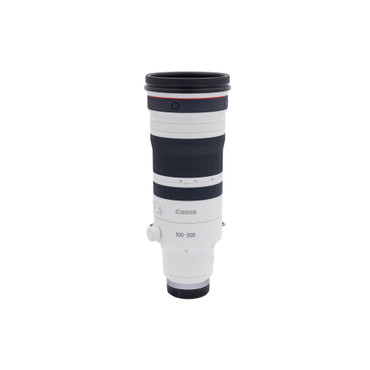
The Canon RF 100-300mm F2.8L takes a 112mm front filter. That is not a typo and it is not a common size. Reviewers who tried to buy one described it as rare and expensive, the kind of accessory you have to hunt for rather than pick up at the counter.
Here is why. Every Canon super-telephoto before this one, the 300mm, 400mm, 500mm primes, solved the filter problem the same way: a small drop-in filter holder tucked near the rear of the lens, where the barrel narrows down to something a 52mm gel filter can span. It is an old, unglamorous piece of engineering that nobody thinks about until it is gone.
On the RF 100-300mm, it is gone. Canon's own engineers explained why in about as plain a sentence as a lens maker ever puts on the record: the drop-in filter was left out to chase a compact size, less weight, and an optical layout that keeps the lens group close to the mount. Put another way, you cannot have the zoom's compactness and the prime's filter drawer at the same time. Something had to give, and Canon decided a rear filter slot mattered less than being able to lift the thing.
The same trade shows up a second time. Canon's existing 200-400mm f/4 carries a built-in extender, flip a switch and you have 560mm without unscrewing anything. The 100-300mm has no such switch. Fstoppers, testing it in the field, noted that leaving out the built-in extender was what let Canon keep the size and weight compact, the same bargain Canon's engineers struck when they cut the drop-in filter. Two conveniences, cut for the same reason.
That reasoning holds up in the hand. At a shade under six pounds it is genuinely light for what it does, one reviewer at PetaPixel admitted it was a lot lighter than they expected walking in. But the trade has a cost beyond the filter drawer. The Phoblographer's review compared it head to head with Canon's own RF 100-500mm and kept landing on the same complaint: the 100-500 is smaller, lighter, and more capable for most of what people actually shoot, and they weren't sure who the 100-300 was really for. It is telling that a lens engineered around portability still lost a portability argument to a cheaper zoom with less speed.
What nobody disputes is that there is nothing else quite like it. It is a constant f/2.8 zoom built on the optical DNA of the old EF 300mm f/2.8 primes that photojournalists and wildlife shooters have leaned on for decades, reengineered from scratch rather than adapted, and Canon's own materials call it the first lens of its kind designed specifically for mirrorless EOS R bodies. You do not get that by keeping every feature the old primes had. You get it by deciding, deliberately, which ones to lose.
So the odd filter thread is not a manufacturing oversight or a corner cut for profit. It is the visible seam where a design decision was made under load. Buy this lens and you are also buying the argument Canon had with itself about what a 300mm f/2.8 is allowed to give up before it stops being one.